
Specialist DSEAR Compliance
Connect Safety Services provides comprehensive risk assessments and technical zoning to ensure your workplace remains safe, compliant, and operational.
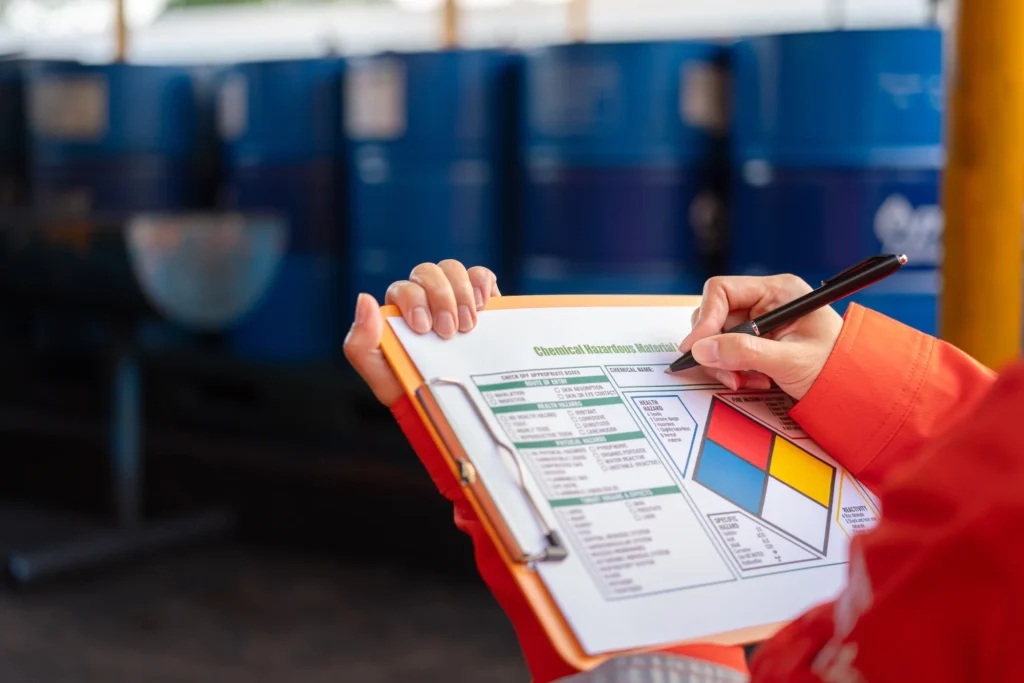
Understanding DSEAR & ATEX Compliance
The Dangerous Substances and Explosive Atmospheres Regulations (DSEAR) work in tandem with the European ATEX directives. Together, they form a framework to protect against fire, explosions, and similar events caused by dangerous substances in the workplace.
At Connect, we help you master the five core principles of the regulations:
Detailed Risk Assessment: Identifying what substances are present and how they behave.
Risk Reduction Strategies: Implementing practical measures to eliminate or mitigate threats.
Area Classification & Zoning: Mapping out physical spaces where explosive atmospheres may occur.
Emergency Planning: Developing robust procedures and training for “worst-case” scenarios.
Information & Training: Ensuring your workforce is competent, informed, and safe.
To provide you with an accurate proposal for a DSEAR Risk Assessment or Hazardous Area Classification, it helps to have a few details ready. Our team of specialists is standing by to help you navigate your compliance journey.
Our Expertise
Why Partner with Connect for DSEAR?
DSEAR is a highly technical field that requires more than just a general safety check.
Connect Safety Services provide technical expertise you can trust!
Bespoke Zoning Maps
We provide clear, easy-to-understand diagrams of your hazardous zones.
Industry Knowledge
From woodworking dust to chemical vapours, we understand the specific nuances of your sector.
Integrated Safety
We align your DSEAR requirements with your wider Health & Safety policy, ensuring a seamless compliance profile.
Export Support
Use our vast pool of experience to interpret complex ATEX standards into actionable business steps.
The Connect Safety Approach
We focus primarily on the two most critical pillars of the legislation; Regulations 5 and Regulation 6. Compliance with these regulations ensure your business is fully protected.
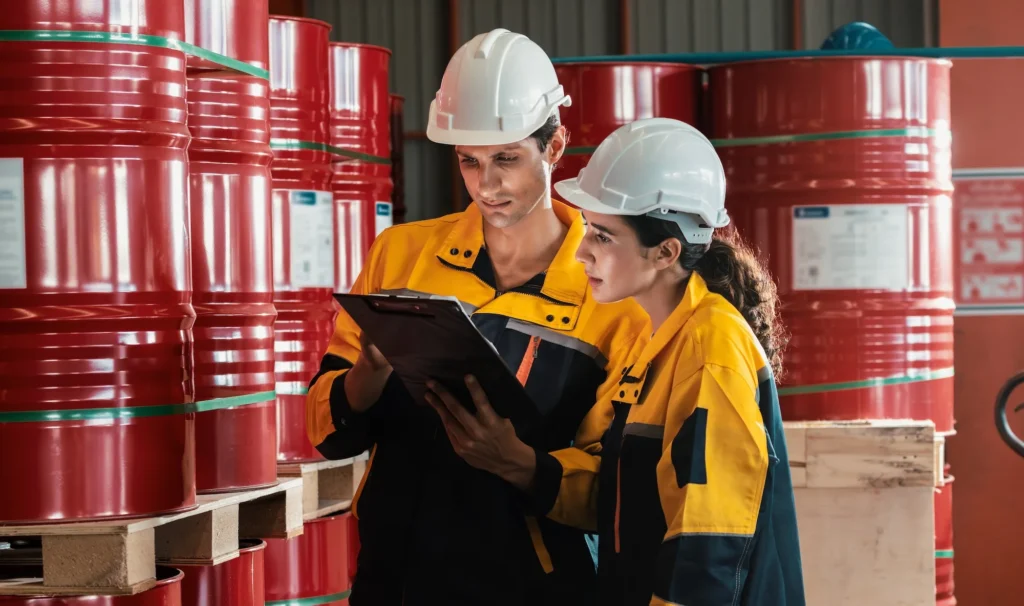
Regulation 5: The Technical Risk Assessment
- Dangerous substances used & their properties
- Any potential for explosive atmospheres to develop
- Any potential for ignition of those atmospheres
- The extent of the consequences for employees and others who may be affected
- Formally record the results and keep the risk assessments up to date.
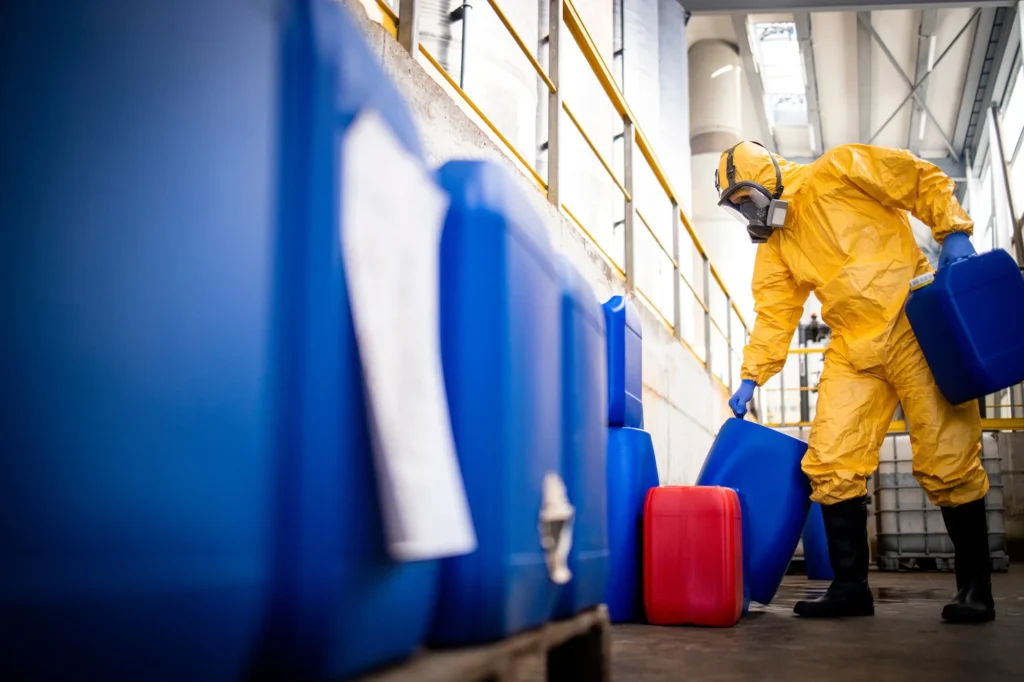
Regulation 6: Elimination & Mitigation
DSEAR Regulation 6 is the requirement for the elimination or reduction of risks so far as reasonably practicable (sfarp).
- Substitute with less hazardous substances.
- Apply control and mitigation measures to manage the risks.
- Arrangments for safe handling, storage and transport of dangerous substances
- Maintain the control and mitigation measures including other general safety measures put in place.
Frequently Asked Questions
View our frequently asked questions to learn more about our industry and services.
It’s broader than most people think. It includes obvious items like petrol, LPG, and solvents, but also includes "hidden" risks like wood dust, flour, metal dusts, and certain paints or varnishes that can create explosive atmospheres.
Yes. If there is a risk of fire or explosion, the regulations apply regardless of quantity. A professional assessment will determine the level of risk and whether specific "zoning" is required for your storage areas.
In the UK, DSEAR is the law that implements the requirements of the European ATEX directives. ATEX 137 focuses on worker protection (which DSEAR covers), while ATEX 95 focuses on the equipment used in those hazardous areas.
Zoning is the process of classifying areas where explosive atmospheres may occur. By "zoning" an area (Zone 0, 1, 2 for gases; 20, 21, 22 for dusts), you can ensure that only appropriately rated electrical equipment is used, preventing accidental ignition.
The law requires assessments to be kept up to date. You should review your assessment whenever there is a significant change to your processes, substances, or equipment, or if you have reason to suspect it is no longer valid (typically every 3–5 years as best practice).
Have more question? Let us know at: will@connectsafetyservices.co.uk
Online Enquiry
Contact Info
Your dedicated safety expert is waiting. Reach out today to hear how Connect Safety Services can help your business with safety compliance.
01978 806222
01978 806333
will@connectsafetyservices.co.uk
Unit 2b Longworth House,
Chapel St,
Northwich
CW9 6DA