

Fire safety isn’t just a legal necessity; it’s a fundamental commitment to protecting your team, your assets, and the future of your Small or Medium-sized Enterprises.
In the UK, the responsibility for fire safety rests firmly with the ‘Responsible Person’ (usually the business owner or manager) under the Regulatory Reform Order 2005. For SMEs, neglecting this crucial area can lead to devastating consequences, from loss of life and property to severe fines and business closure.
The Legal Imperative: Your Responsibilities
Compliance with the FSO is mandatory for virtually all non-domestic premises in England and Wales. This is not a matter of ‘nice-to-have’ but a clear legal duty that carries significant penalties for non-compliance, including unlimited fines and, in severe cases, imprisonment.
As the Responsible Person, your duties include:
- Conducting a Fire Risk Assessment: This is the cornerstone of your fire safety strategy. It involves identifying fire hazards, evaluating the risks, and putting in place measures to eliminate or reduce them.
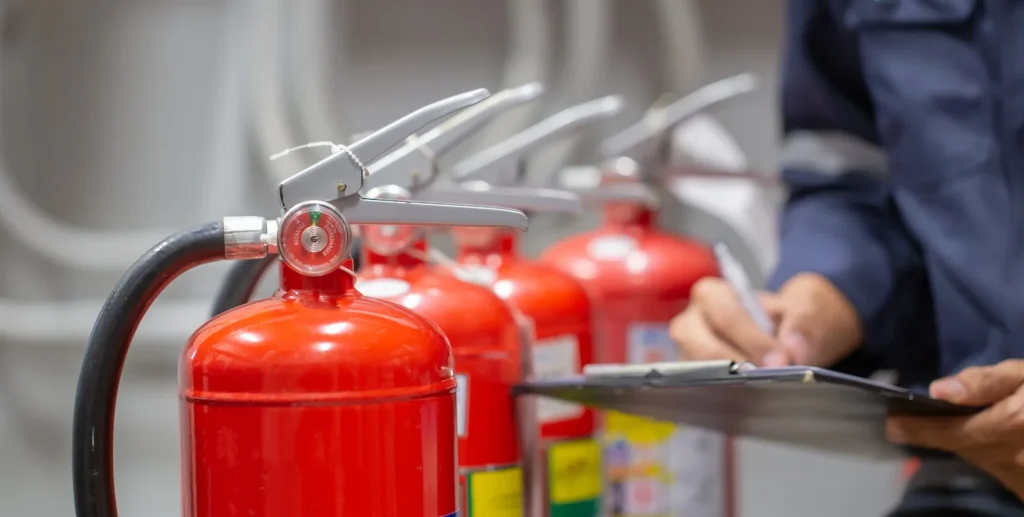
- Providing and Maintaining Fire Precautions: Ensuring you have adequate fire-fighting equipment (extinguishers), fire detection systems (alarms), and clear emergency lighting.
- Ensuring Safe Escape Routes: All escape routes and fire exits must be kept clear, unlocked, and clearly signposted at all times.
- Emergency Planning and Training: Creating a clear emergency plan and ensuring all employees receive appropriate fire safety training and participate in regular fire drills.
The Cornerstone: The Fire Risk Assessment
The Fire Risk Assessment is the formal process you must carry out and, by law, record in writing if you employ five or more people. It is the document that dictates all other fire safety actions in your business.
A suitable and sufficient assessment follows five key steps:
- Identify Fire Hazards: Pinpoint potential sources of ignition (e.g., electrical equipment, naked flames) and fuel (e.g., paper, chemicals, rubbish).
- Identify People at Risk: Consider all occupants, including employees, visitors, and contractors, paying special attention to those who may be particularly vulnerable.
- Evaluate, Remove, or Reduce the Risk: Implement measures to remove hazards or reduce the risk of a fire starting and spreading.
- Record, Plan, Instruct, and Train: Document your findings, create an emergency plan, and provide staff instruction.
- Review and Update: The assessment must be reviewed regularly and immediately following any significant changes to the premises, processes, or occupancy.
Protecting Your People and Your Livelihood
Beyond the legal requirement, robust fire safety management protects the two things most vital to an SME: your staff and your business continuity.
Employee Safety and Confidence
The moral obligation to protect your employees is paramount. A well-prepared team:
- Knows How to Evacuate: Regular drills ensure quick, calm, and safe evacuation to the designated assembly point.
- Understands Procedures: Clear training ensures staff are aware of how to raise the alarm and, if safe to do so, use appropriate fire-fighting equipment.
- Reduces Panic: Familiarity with the escape plan significantly reduces the risk of injury and panic in a real emergency.
Financial and Reputational Protection
A fire can wipe out years of hard work. Effective fire management helps safeguard your bottom line:
- Prevents Catastrophic Loss: Minimising the chance of a fire starting protects your building, stock, IT infrastructure, and essential business records.
- Secures Insurance: Non-compliance can invalidate insurance policies, leaving you to cover the total cost of damages. Maintaining compliance is essential to ensure payouts.
- Maintains Operations: Even a small fire can cause severe business interruption. Protecting your premises helps avoid costly downtime and loss of income.
A business is built on hard work and investment; don’t let a preventable fire risk it all. Implementing comprehensive fire safety management is an investment in stability, security, and peace of mind.
To take the guesswork out of compliance and ensure your business meets every legal and best-practice requirement, Connect Safety Services have a collection of tried and tested fire safety services that can help keep your business safe and your balance sheet healthy.